Everything a first-time visitor needs — history, rooms, getting there, when to go, where to eat.
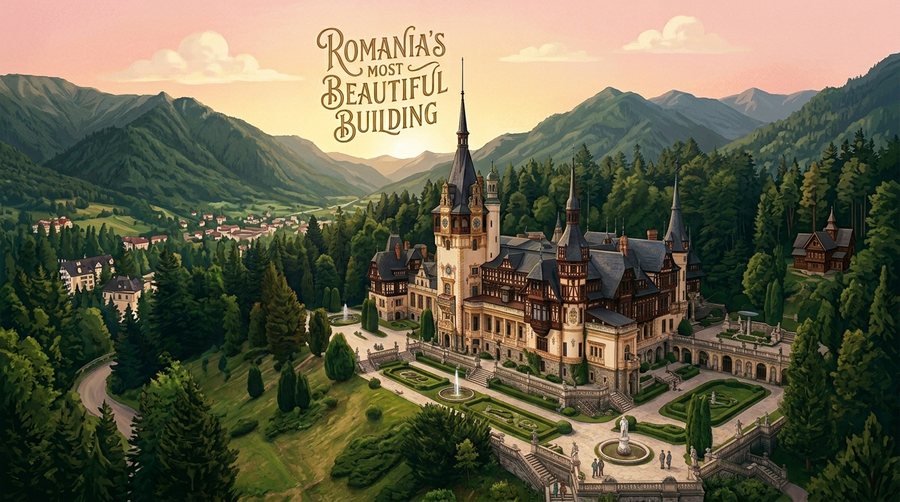
Sinaia is a whole mood. You step off the train and the air just hits you — crisper, smelling like pine and damp mountain moss. Tucked into the Bucegi Mountains, it was a quiet spot until King Carol I decided it was the perfect place to build a summer home. Now people call it the "Pearl of the Carpathians." Once you see the fog rolling over the peaks, you kind of get it. The town is a mix of fancy old villas and steep, slightly crumbling stairs. Wear good shoes — your calves will hate you by noon.
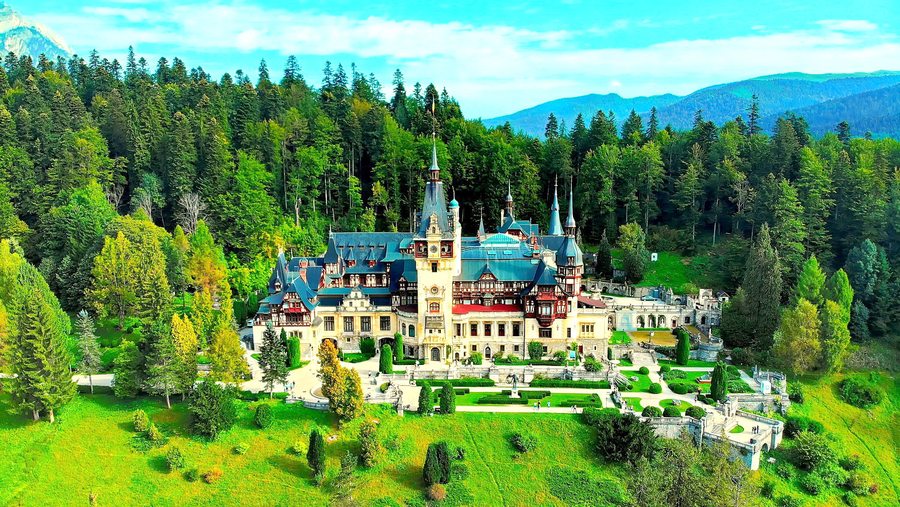
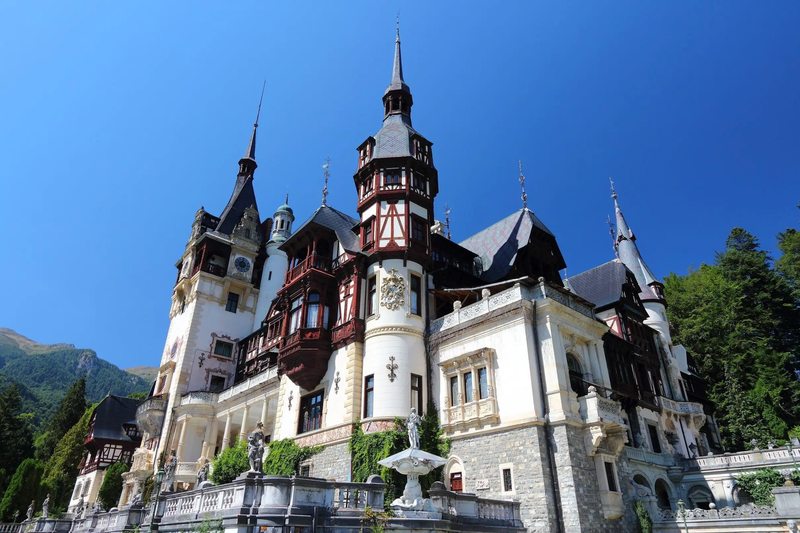
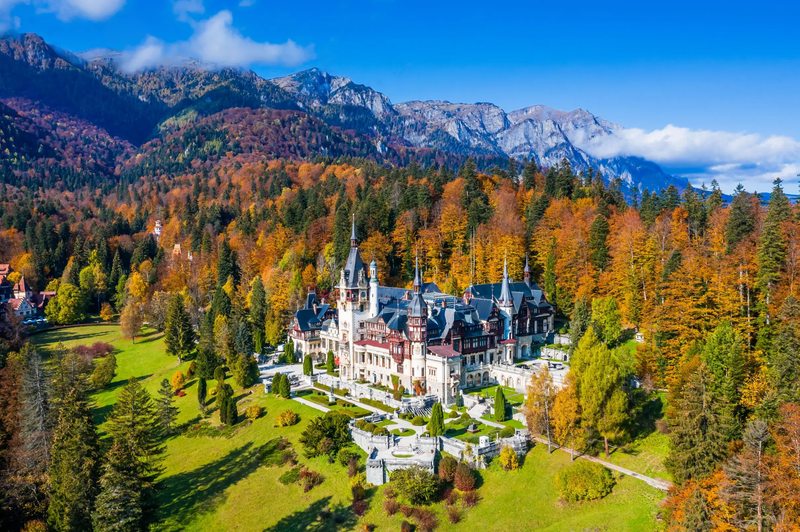
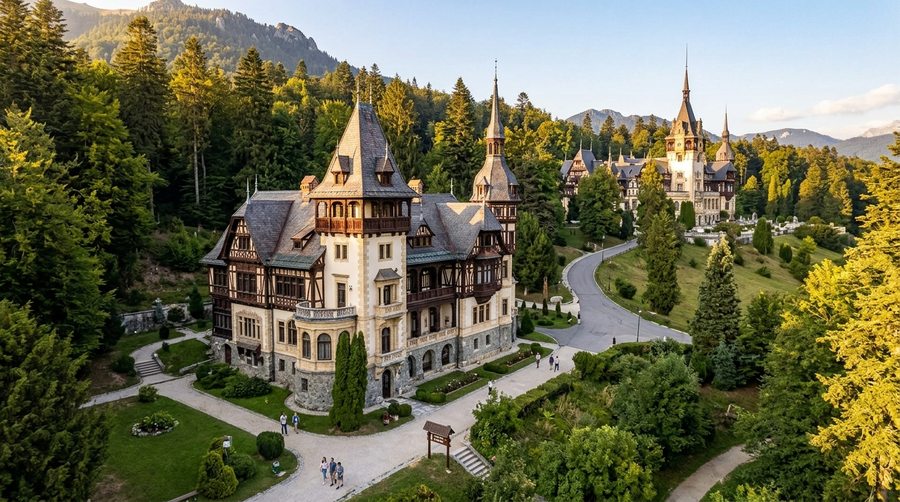
The castle's Neo-Renaissance façade — every inch carved, every spire deliberate.
History & the Legacy of the Romanian Royal Family
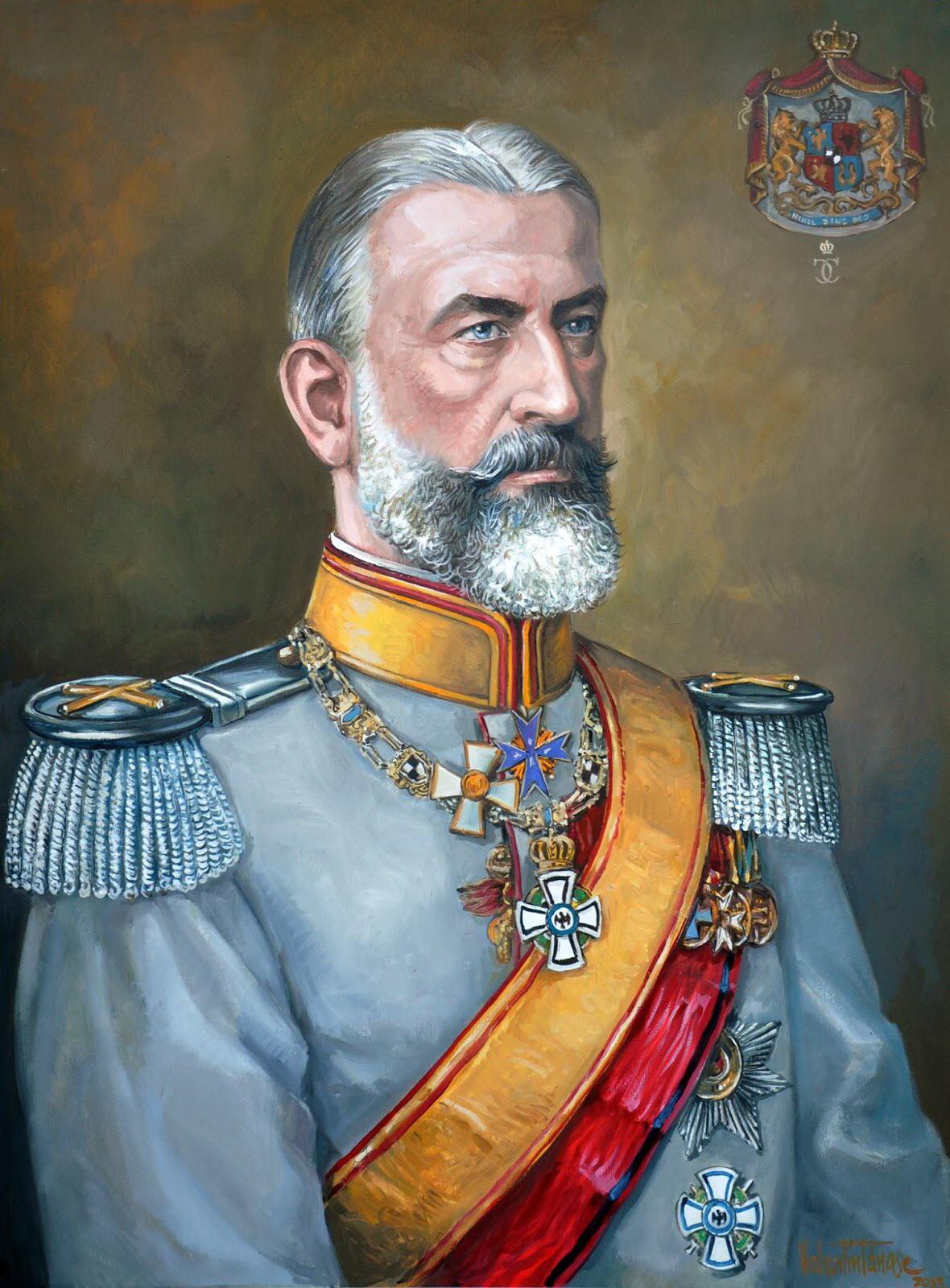
King Carol I wasn't even Romanian. He was German, from the Hohenzollern-Sigmaringen line. He arrived in the 1860s and decided Romania needed to look the part of a European power. Peleș was his obsession — he rejected the first three architectural plans for being too similar to other palaces. He wanted something unique.
Construction started in 1873. It was a logistical nightmare. The total cost was roughly 16 million Romanian lei in gold — about $120 million in today's money. And it wasn't just a house: it was the first castle in the world with full electricity, central heating, a central vacuum system, and a small elevator. Most of Europe was still fumbling with candles and drafty hallways.
The construction crew was a Tower of Babel. Queen Elisabeth wrote in her diary that they had Italians as masons, Romanians building terraces, Albanians and Greeks working in stone, and Germans as carpenters — 14 languages spoken on-site. The royal family used it until 1947 when the communists seized it. Later, Ceaușescu closed the estate entirely. Legend has it the curators, terrified he'd ruin it with tacky renovations, told him the woodwork was infested with a deadly fungus called Serpula lacrymans. It worked. He was so paranoid about his health he barely set foot inside.
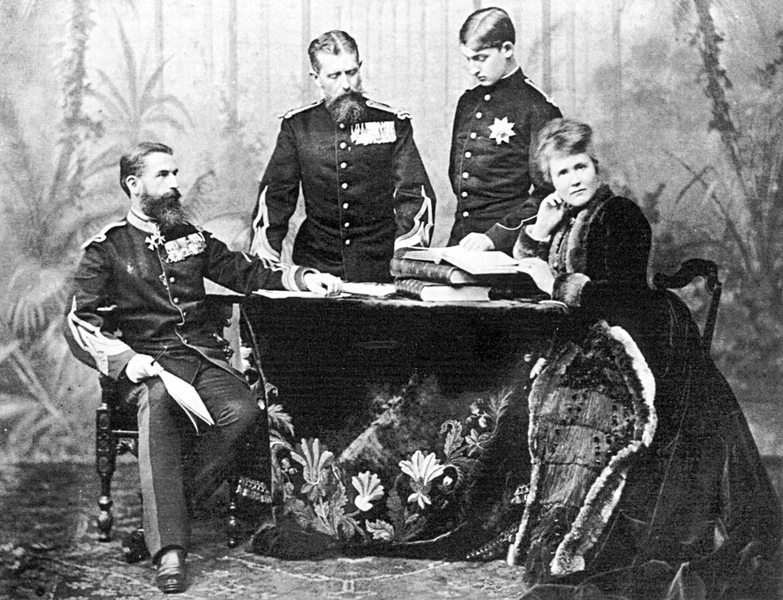
The Romanian royal family who built and inhabited Peleș for over 70 years.
Architectural Highlights: German Neo-Renaissance Done Right
The style is mostly German Neo-Renaissance, but it's gloriously messy. Half-timbered walls sit next to Italian marble; Saxon stonework butts up against Moorish arches. The exterior has sharp spires that poke at the clouds, with carved detail on every surface. It's not minimalist. It's the opposite. It's "more is more." The courtyard is the standout — faded murals still look incredible against dark wood beams and the first concrete foundation used in Romania.
Architect's note
The original plans were drawn by Wilhelm Doderer. After Carol I rejected several proposals for being too conventional, Johannes Schultz took over and oversaw the grand expansion that gave the castle its distinctive layered silhouette.
Must-See Rooms: From the Grand Armoury to the Imperial Suite
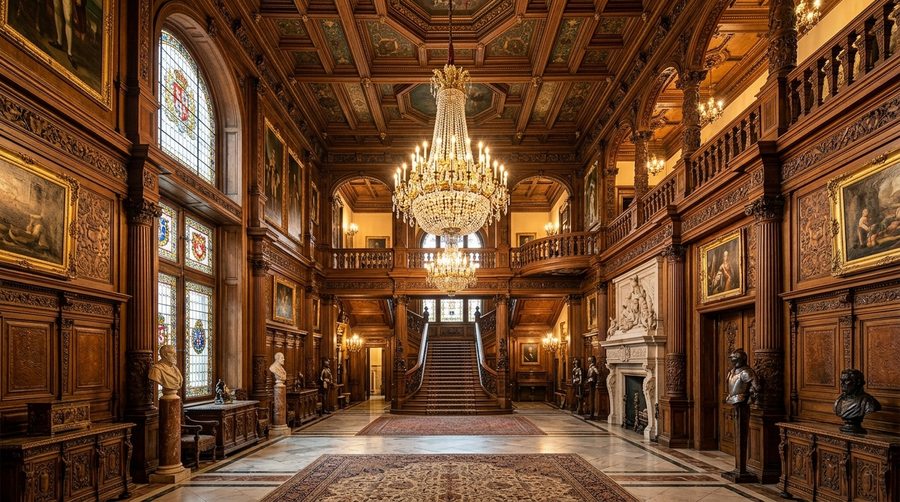
The Hall of Honor is the first thing you see — massive, with a ceiling made of movable glass panels that slid open to vent cigar smoke during royal parties.
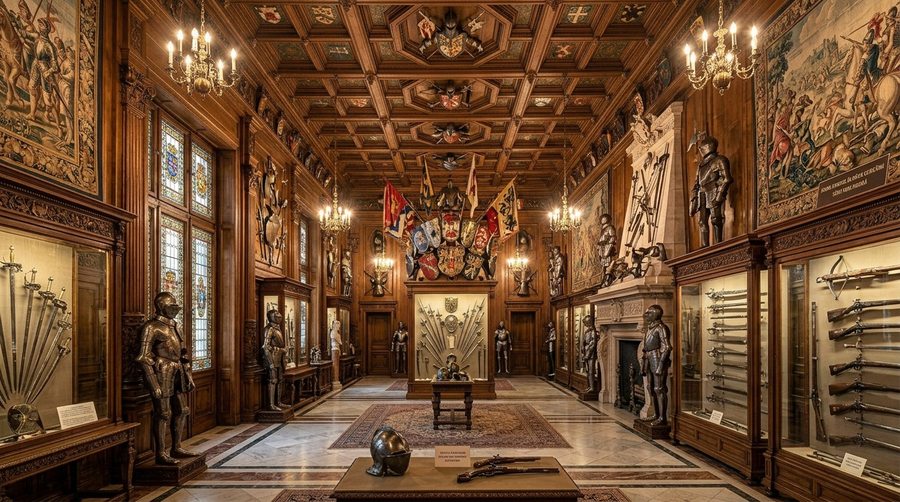
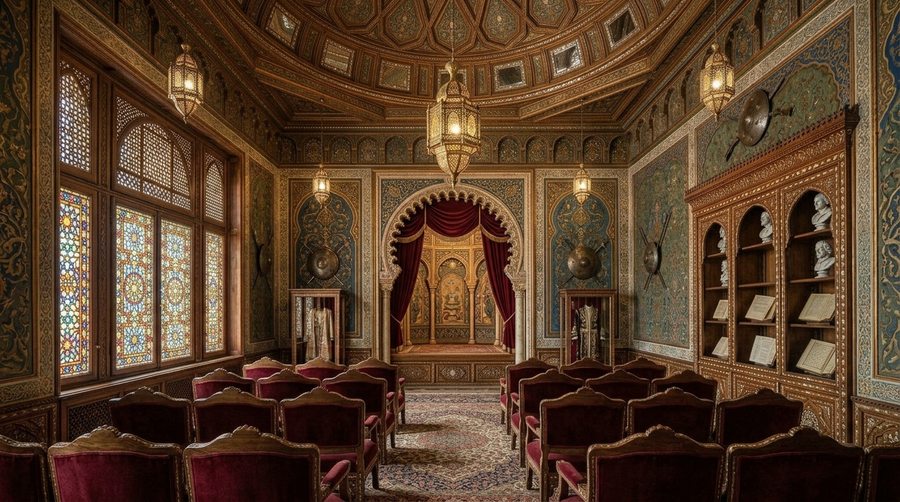
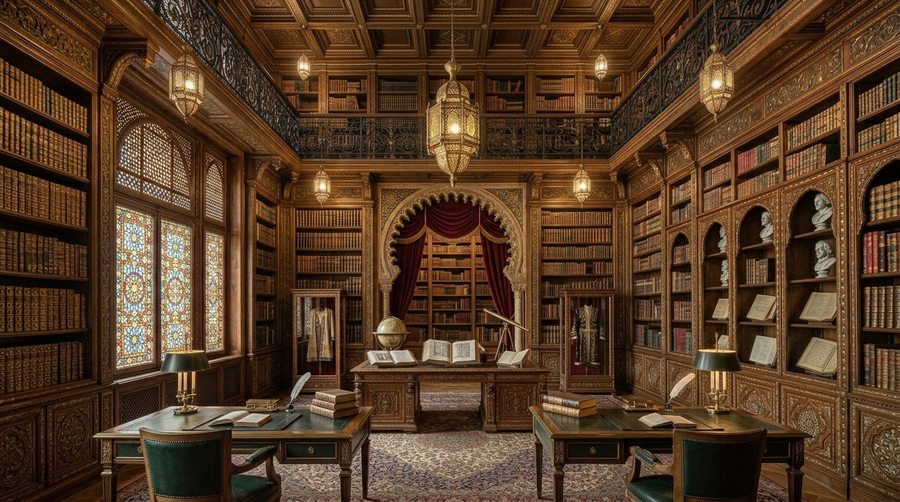
The Grand Armoury is a history nerd's dream: over 4,000 pieces of weaponry including a full suit of armour for both horse and knight. The Royal Library has a secret door hidden behind a bookshelf — because every king needs an escape from a boring conversation. The Private Theatre seated just 60 people but was the first place in Romania to screen a film projection.
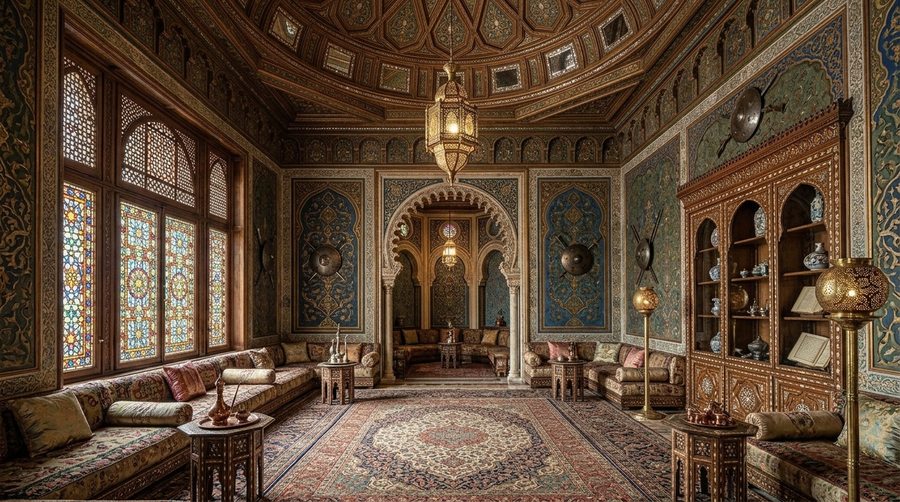
The Imperial Suite was decorated for the visit of Emperor Franz Joseph I of Austria — silk and gold so heavy you feel you can't breathe too hard. And don't miss the Moorish Hall and Turkish Salon, covered in Persian rugs and copper lamps. They feel more like Istanbul than the Carpathians.
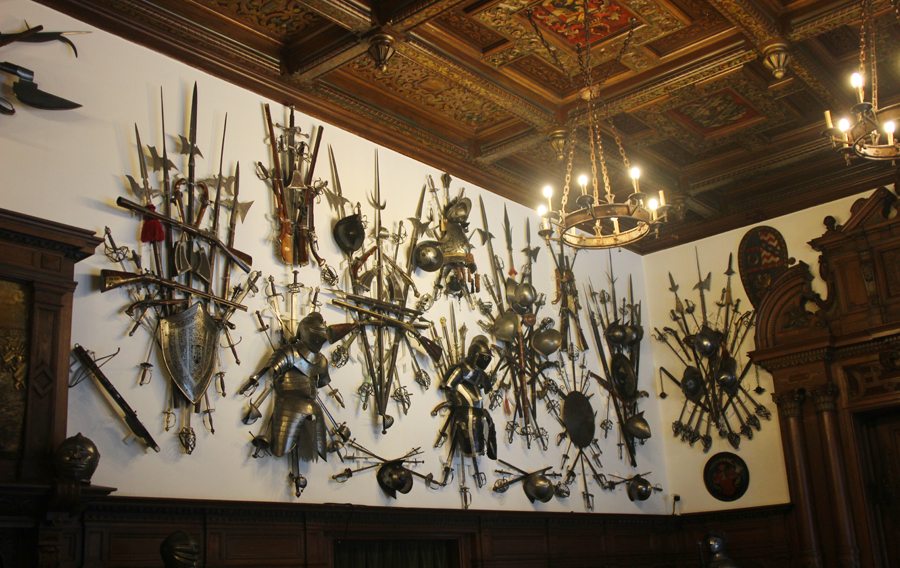
The Grand Armoury — over 4,000 weapons and armour pieces spanning five centuries.
Peleș on the Silver Screen
If the castle looks familiar, you've probably seen it on Netflix. Peleș has become a go-to location for filmmakers looking for a "vaguely European royal vibe." It served as the primary setting for the A Christmas Prince trilogy — standing in as the fictional Kingdom of Aldovia. It also featured in the Rachel Weisz and Adrien Brody film The Brothers Bloom, where it played an eccentric millionaire's estate in New Jersey (a bit of a stretch). Hallmark Channel fans will also recognise it from A Princess for Christmas.
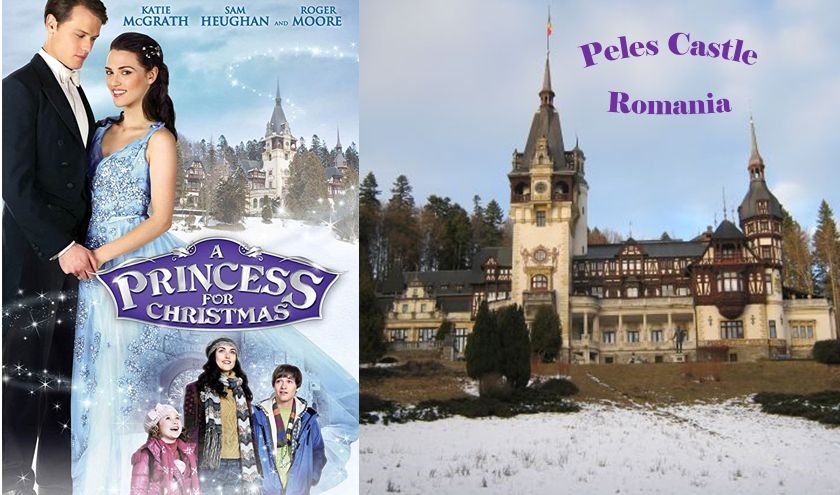
Peleș Castle as the fictional Kingdom of Aldovia in Netflix's A Christmas Prince trilogy.
Sinaia's Sacred Soul: The Sinaia Monastery
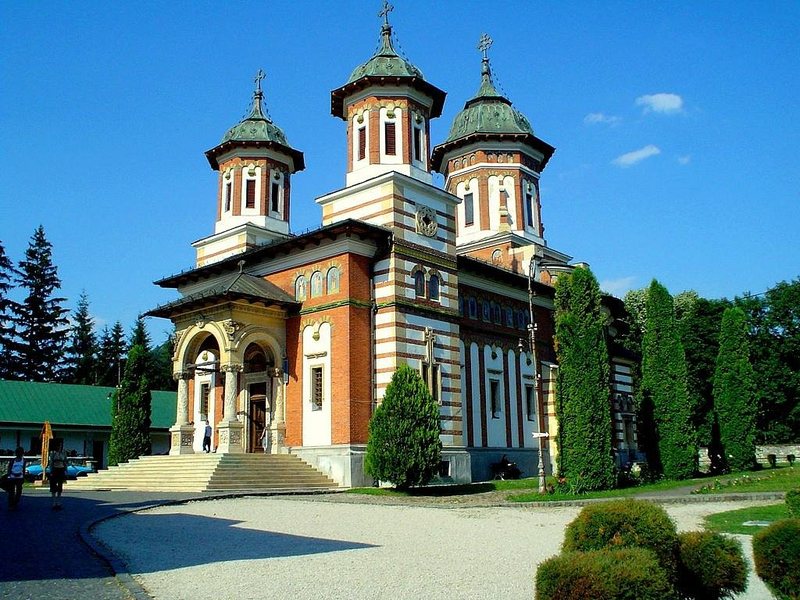
On your way up the hill you'll pass a complex of white stone and dark wood — the Sinaia Monastery, founded in 1695 by Prince Mihail Cantacuzino after a pilgrimage to Mount Sinai. That's where the town's name comes from. The "Old Church" is small and moody, built in the traditional Brâncovenesc style — a mix of Byzantine, Ottoman, and Western Renaissance. The "Great Church" was built later and was the first church in Romania lit by electricity. Worth a 15-minute stop for the gold-leaf mosaics alone.
Exploring the Grounds: Pelișor Castle & the Royal Gardens
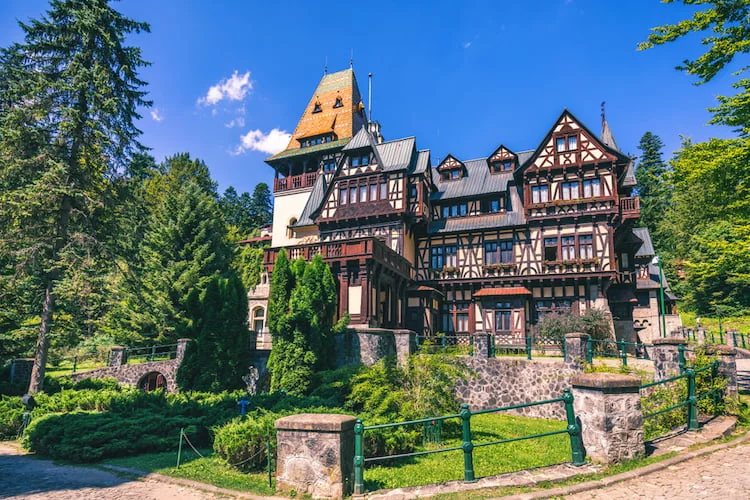
Don't leave after the main castle. Walk a few hundred metres uphill to Pelișor. It's smaller, more intimate, built for King Ferdinand and Queen Marie. Marie had extraordinary taste — she loved Art Nouveau and the "Golden Room" in Pelișor is covered in actual gold leaf. The gardens around Peleș are filled with statues of Carol I and his wife Elisabeth, who wrote poetry under the pen name Carmen Sylva. A creek runs through — serene, if you can tune out the other tourists.
Practical tip
Pelișor is on the same ticket path as Peleș. Buy your combined entry at the main kiosk — it's the same short walk up and well worth the extra few RON.
Hiking the Royal Path
If you have decent boots and two spare hours, find the Poteca Regală (The Royal Path). It's a 125-year-old paved trail that starts near the castle and leads up to the Franz Joseph Cliffs — the favourite walking route of the royal family. The old paving stones are still there. The climb is intermediate. The reward is a sweeping overlook of the Prahova Valley. Continue past the cliffs and you'll reach Poiana Stânii, a mountain meadow where the royals used to picnic. There's a small restaurant there, though it's often closed in low season.
Getting There from Bucharest & Brașov
The DN1 highway from Bucharest to Sinaia is a parking lot on weekends — it can take four hours to drive 120 km. Take the train. From Bucharest Gara de Nord, hop on a CFR or Astra Trans Carpatic service: about 1.5–2 hours, cheap, and the mountain views from the window are worth it. From the Sinaia station, walk uphill through the park (20–30 min) or grab a Bolt for ~15–20 RON. From Brașov it's even easier — roughly an hour's ride.
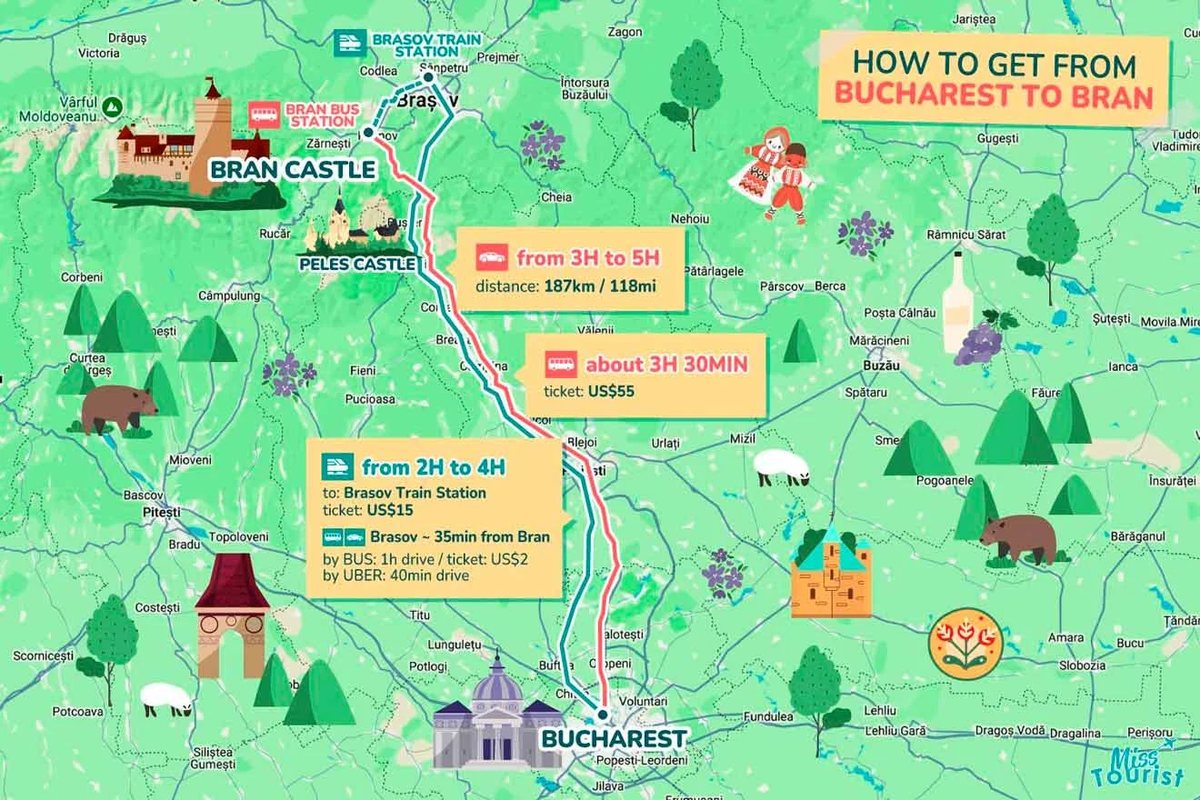
Transport routes from Bucharest and Brașov to Sinaia — train is always the right call.
Best Time to Visit
Summer is packed and hot — you'll shuffle in line. Autumn is the winner. The Carpathian trees turn orange and red, and the castle looks like it's glowing. Winter is beautiful in the snow but icy paths and ski-season prices make it tricky. Avoid weekends entirely if you can. Wednesday or Thursday mornings are your best bet for a bit of peace.
Watch out
Don't show up on a Monday — it's closed. Tuesdays are often closed too, especially off-season. November sometimes brings a month-long deep clean. Check
current opening hours before you travel.
Photography Tips
Light inside is dim and flash is not allowed — use phone night mode with steady hands. Outside, the best shots are from the lower terrace looking up at the towers. Go early (around 8:30 AM) and the light hits the façade perfectly without a stranger's head in your frame. Stay on the paths: the guards are vigilant and will whistle if you step on the grass.
Where to Eat & Stay in Sinaia
Carol Gastro Bierhaus is the closest decent restaurant — a Bavarian vibe that matches the castle, with heavy dishes like pork knuckle and bratwurst. For something more modern, head into town for Bruma (excellent coffee, city-style menu). Vegetarians should seek out Kuib. For dessert, find any street vendor selling papanași — Romanian fried doughnuts with sour cream and blueberry jam. A gut-punch of calories but completely worth it.
For accommodation: Hotel Palace feels like a Wes Anderson set. Hotel Economat was the royal staff building — right next to the castle, you can be first in line. Airbnbs in the villas around Dimitrie Ghica Park put you within walking distance of everything.
One-Day Itinerary
08:30 — Train from Bucharest Gara de Nord
10:15 — Arrive Sinaia, walk up through the park
10:45 — Quick stop at Sinaia Monastery
11:30 — Tour Peleș Castle — do the extended tour
13:30 — Pelișor Castle and the royal gardens
14:30 — Late lunch at Carol Gastro Bierhaus. Get the papanași.
16:00 — First 20 minutes of the Royal Path for the valley views
17:30 — Coffee in town, then back to the station